
First, decide where it will be attached
The surface material, attachment position and environment of packaging, apparel tags or other objects affect label structure and reading performance.
RFID LABELS
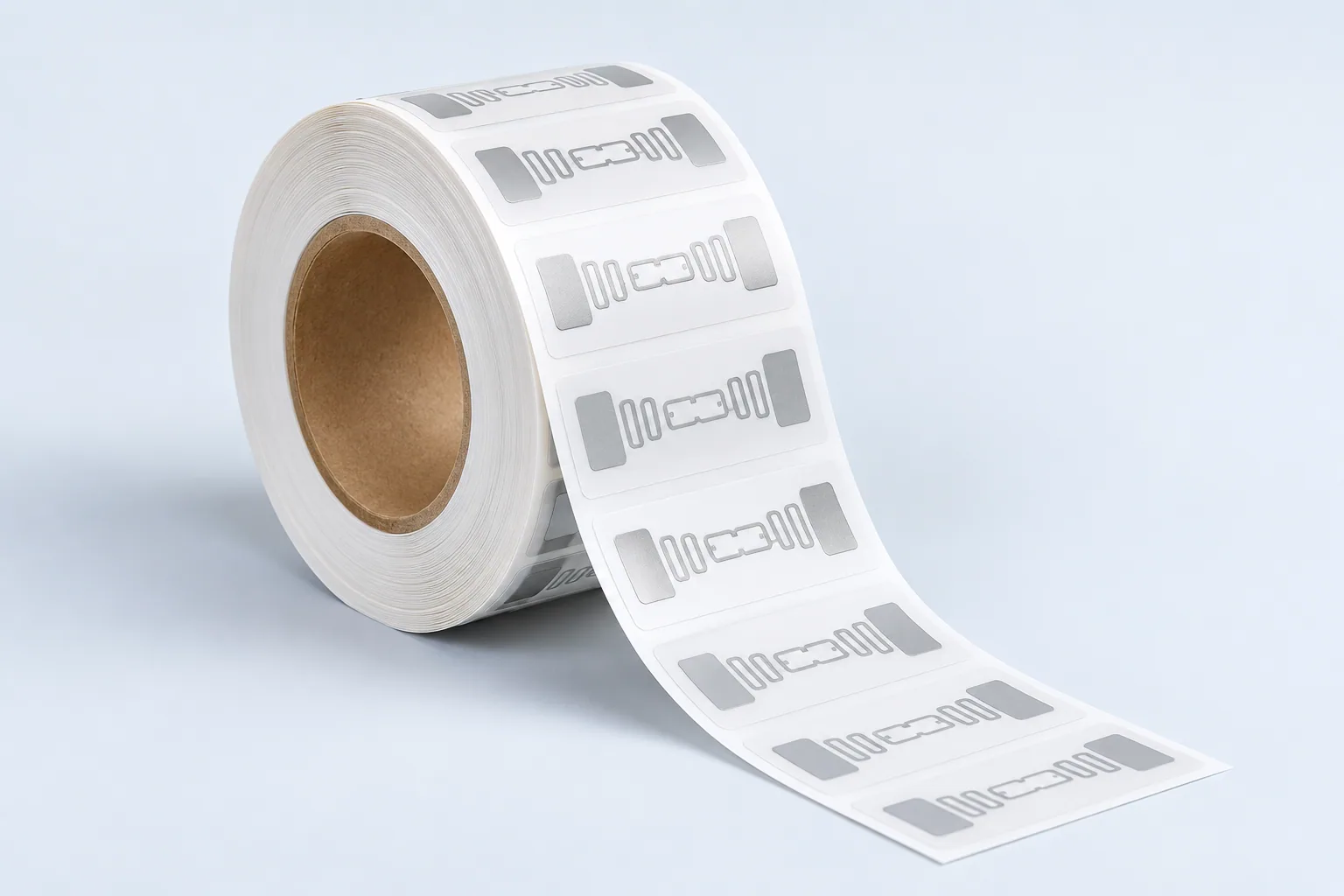
We coordinate blank RFID label selection and production processing for product identification and movement. Discuss the surface material, finished dimensions, chip protocol and reading environment to determine a suitable label structure and roll format.
SELECTION CONSIDERATIONS
The surface material, attachment position and environment of packaging, apparel tags or other objects affect label structure and reading performance.
Confirm finished dimensions and shape, surface material and adhesive, chip and antenna, core size and winding direction against processing and equipment conditions.
Validate attachment, printing, encoding and reading with samples, then confirm production and acceptance criteria. Quantities and lead times depend on the specific requirements.
BEFORE WE START
Supply specifications and processing requirements are confirmed against samples. Include target dimensions, materials and quantities in your inquiry.
QUESTIONS & ANSWERS
Dimensions are the starting point. Surface material, adhesive, chip, antenna and roll format also need confirmation. Provide a sample or current specification sheet before production is arranged.
Shape, spacing, material, antenna and processing conditions must all match. A confirmed fit can reduce new die costs and tooling time.
If labels need printing or RFID encoding, define the data source, encoding rules, read-back verification and handling of faulty labels in advance.
LET’S TALK ABOUT YOUR NEEDS
Start with a label, a printer or an operational workflow.